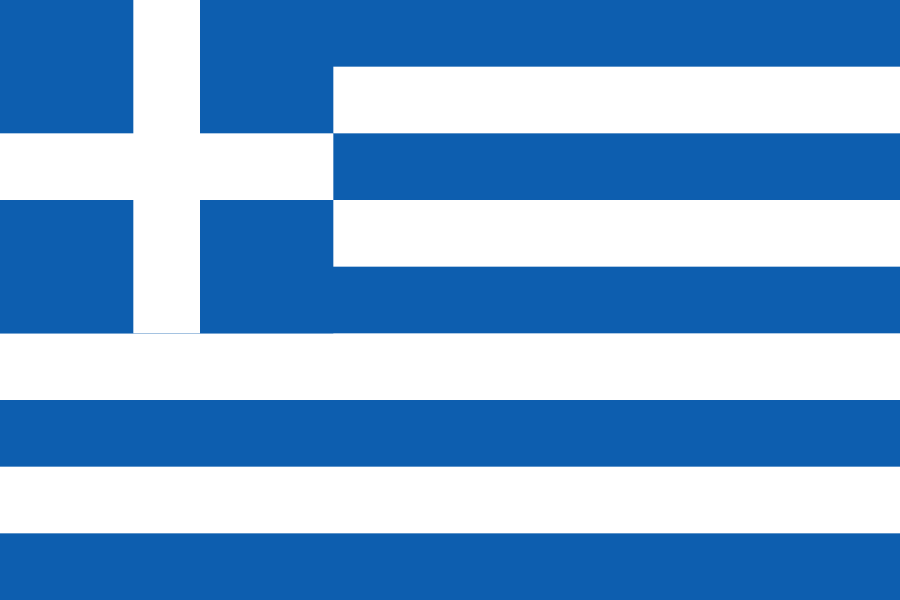
 Greece

See
Gournia
A Minoan town site by the sea road south of Agios Nikolaos. Hours follow the state schedule, so check before you go.
Getting there: 18 km south-east of Agios Nikolaos, 17 minutes by car

A lake in the middle of a harbour town, a leper island and Zeus's cave. Three days in eastern Crete, planned for the shoulder season.
Photo: Cayambe, CC BY-SA 4.0
Agios Nikolaos is the eastern half of Crete's calling card, and it has one trick the rest of the island can't match: a round lake in the middle of the town. Lake Voulismeni is 137 m across and almost 49 m deep, the French army cut a canal from it to the harbour by 1907, and the Greeks say the goddess Athena once took a bath in it. The town around it is modern and easy, but the reasons to base yourself here are all within an hour's drive: a Venetian island fortress that became a leper colony, a village with the best Byzantine frescoes on Crete, a mountain plateau of windmills and the cave where Zeus is said to have been born.
Three days is the right length because the area is compact but the roads are slow. The town and the Gulf of Elounda fill one day, the hills above Kritsa and the Lasithi Plateau fill a second, and the far east, Sitia and the palm beach of Vai, is a long day that needs a car and an early start. A fourth day would mostly mean more beach, and in November the beaches are the part that has packed up for the winter.
Day one is the lake, the museum and the boat to Spinalonga, day two is Kritsa, ancient Lato and the Lasithi Plateau, and day three is the long drive to Sitia and Vai. The big warning is Tuesday: the museum, Spinalonga, Panagia Kera, Lato, the cave and Sitia's museum are all closed on Tuesdays, so start on a Wednesday and you never hit a locked gate. The plan was checked for early November, when the sun sets around 5:15pm and the clocks have already gone back. The island is open in winter, but the boats are the one big question mark; the day-one text tells you how to deal with it. More on the country in our Greece page, and if you have the time, Heraklion is an hour west.
Every stop from the plan below, colored by day. Pick a day to see its route.
The lake and the museum first, the boat to Spinalonga before lunch, the Gulf of Elounda on the way home and meze by the harbour at night.
The best frescoes on Crete, an ancient Dorian city and a village on a hill, then the mountain plateau and the cave where Zeus is said to have been born.
A fortified monastery, a native palm forest running down to a beach and a quiet harbour town, in one long drive east.
Spinalonga closes at 15:30 in winter, so the island comes before lunch, not after. Do the lake and the museum (08:30-15:30, closed Tuesdays) early, drive north to Plaka for a boat around 11am, then eat and stop at Elounda on the way back. The big November question is the boats, not the site: phone a boat operator the day before and keep the plan B in the Spinalonga stop.

Locals just call it i limni, "the lake". It is a small, round, spring-fed sinkhole, 137 m across and 48.8 m deep, that was freshwater until the sea got in. A canal dug by the French army between 1905 and 1907 joined it to the harbour, and the rim is now ringed with cafes. The legend says Athena bathed in it. The geology is less glamorous: a collapsed cave in breccia, on a fault line that cuts through the town.
Walk the loop around the edge, then climb to the small park above the water for the panoramic view. The cafes on the rim are overpriced, so have a coffee for the view and eat elsewhere. The town gathers here at midnight on Orthodox Easter for fireworks.
Ten minutes uphill from the lake, on Konstantinou Palaiologou street, is the museum that explains everything you are about to drive past. It collects finds from the region around Agios Nikolaos, and it is small enough to finish in an hour.
This is the rainy-morning stop and the one to do before the countryside, because it sets up Lato and the cave on day two.

The name means "long thorn", given by the Venetians who laid the foundation stone of the fortress in 1579, and the ancient name is Kalidon. The Ottomans took it in 1715, and from 1904 Crete used it as a place for people with leprosy. It grew into a small town with a school, shops and families, until the hospital closed in 1957. It is the second most visited site on Crete.
The walk is a loop of alleys, the old hospital buildings and the fortress walls, and it takes about an hour. The boat from Plaka is only five to ten minutes. The Ministry of Culture lists the site open all winter, 08:30 to 15:30, closed Tuesdays, which is why the island comes before lunch today. The boats are the part we couldn't confirm: the main cooperative's booking pages end in October, though winter tours from Plaka exist. Phone an operator the day before.
Plaka is the village directly across the water from Spinalonga, 18 km from Agios Nikolaos and 28 minutes by car. In Victoria Hislop's novel The Island it is where the story of a family begins, and the fish tavernas along the front all know it.
Eat after the island. Order a Greek salad, a plate of fried fish or a grilled catch by the kilo, and ask what the boat captain thinks of tomorrow's weather. In November only a few tavernas stay open, so choose the one with people at the tables.

Elounda is on the road home, 5 km south of Plaka and 12 km north of Agios Nikolaos. It is a small fishing port that became a resort, with a square, a harbour and a handful of sandy beaches within walking distance. It is the other base in this guide.
Do the short walk along the causeway to the sunken city of Olous, the original Elounda: you can still see walls under the water on a calm day, and further on there is a stone storehouse, a few old windmills and a canal with fishing boats. In November it is empty and good for it.
Ammoudi is the small beach on the north-west side of town, a short walk from the lake along the shore. In November it is a place to watch the light fade over the bay. The sun sets around 5:15pm early in the month, so go at 4:45pm and walk back along the harbour as the lights come on.
Kitroplatia is the harbour-side strip behind the lake, and it is where the town's meze restaurants cluster, side by side with places aimed at visitors. Meze here means a table of small plates: dakos, fried cheese, greens, snails if you are brave, grilled meat, and a carafe of tsikoudia (grape spirit) that arrives with the bill.
Many seasonal places close in November, so walk the strip first and pick one with Greek families at the tables.
An early start matters: Panagia Kera opens at 08:30 and closes at 14:30 in winter, Lato and the cave close at 15:30 (last entry 20 minutes before), and the cave is a 76-minute drive from Kritsa. Do the church, the village and Lato in the morning, eat early, and leave Kritsa by noon so you reach the cave around 1:15pm. All three are closed on Tuesdays. The mountain road can be hard after snowfall, so check the weather.

The Church of Panagia Kera stands about a kilometer before Kritsa, 9 km from Agios Nikolaos, and from the road it looks like a plain stone church among olive trees. Inside, every wall is painted. The central nave and dome date from the 13th century, the side aisles were built and painted in the early to mid 14th century, and the bright colors belong to the Palaiologan Renaissance.
Three aisles, three stories: the Virgin in the middle, Saint Anne in the south with scenes from the life of Mary, and Saint Anthony in the north under a great Second Coming and Judgement Day. The church also has a tale of a stolen icon: a trader took the miraculous icon of the Virgin in 1498 and it ended up in Rome. Go at opening, when the light through the door is still low and the bus groups haven't arrived.

Lato sits on a saddle between two hills 10 km from Agios Nikolaos and 3 km north of Kritsa, with a view down to Mirabello Bay. It was a Dorian city-state, built mostly in the 5th and 4th centuries BC and destroyed around 200 BC. Its port, Lato pros Kamara, lies under the modern town you slept in, and Alexander the Great's admiral Nearchus was born at Lato.
Only a fenced part of the ruins is open to walk through, and not much stands higher than a wall, so the site is about the setting, and the setting is excellent. Wear shoes with grip.
Kritsa is built like an amphitheater on the Kastellos hill, 375 m up, 10 km from Agios Nikolaos. In the Middle Ages it was thought to be the largest village on Crete, and it was destroyed many times because it joined every Cretan revolt.
The main street sells textiles and souvenirs; ask where something was made. Walk up the side lanes for the views over the olive groves.
Eat early, around 11:15, because the cave won't wait. A taverna on the square or the main street will do a good dakos (barley rusk topped with tomato and cheese), lamb or a plate of greens and a spanakopita (spinach pie) straight from the oven. This is also where you can buy a bag of kalitsounia, small cheese pies that are sweet in Lasithi.

The cave at Psychro is the one Arthur Evans and David Hogarth identified with Dikte, the place where, in the version told by Apollodorus, Rhea gave birth to Zeus and hid him from his father, and the nymphs fed him on the milk of the goat Amalthea. Scholars still argue about whether it is the right cave.
The cave was closed from May 2024 for work on the walls, lighting and the stone path, and reopened on 29 May 2026. You park, climb a steep stone path to the mouth (allow about 15 minutes), then step down inside to a pool and lit stalactites. There is no lift. Wear sturdy shoes.

The Lasithi Plateau is a flat farming plain 840 m up, 11 km long and 6 km wide, ringed by mountains. It was once home to around 10,000 white-sailed wind pumps, built to a local design since the 1920s to irrigate the fields. Most were replaced by diesel and electric pumps, and the ones left are now more photo than farm.
The Venetians called the plateau a thorn in the heart of Venice, after its rebellions, and drove out the farmers for two centuries. Drive the ring road through Tzermiado and Agios Georgios, stop for the rows of sails, and be off the mountain by 4:30pm, before dark. Allow about 65 minutes for the drive down to town.
Back in Agios Nikolaos, go for a plain Cretan dinner: grilled lamb chops, a pan of moussaka (eggplant and minced meat under bechamel) or pastitsio (baked pasta with meat sauce) at a taverna a few streets off the harbour, and a glass of the house wine.
Share a plate of loukoumades (honey doughnuts) afterwards, then walk once around the lake in the dark.
This is a 62 km drive to Sitia and 85 km to Vai, about 1 hour 50 minutes one way, so start at 8am and be back before dark: sunset is around 5:15pm in early November and earlier by December. Toplou's hours are the weak point (sources agree on 9-13 and 14-18, but not on winter), so phone ahead on +30 28430 61226. Kazarma fortress in Sitia is closed all winter. No buses we could confirm run the whole route in winter.

The Toplou Monastery is a fortress as much as a monastery: thick walls, a tower and a name that means "the place of the cannon" (the top is Turkish for cannon). It was founded around the 14th century at the foot of the Itanos promontory, in a dry landscape with nothing else around it, and it is about 20 km east of Sitia by road.
Walk the courtyard and the museum rooms if open. Vai is 8 km further on.

Vai is the Greek word for palm, and it is a protected area with several thousand palms in a valley running down to a beach on the north-east corner of Crete. The palms are Phoenix theophrasti, the Cretan date palm, one of only two palm species native to the Mediterranean, and the forest is among Europe's only palm forests.
In summer it is a famously crowded beach. In November you get the opposite, an empty grove and a long sand beach. Walk the paths under the fronds and keep to the marked tracks, since the forest is protected.
The beach below the palms is about 23 km from Sitia and the sea is around 20°C in early November, so a swim is possible on a calm day. There will be no lifeguard, so stay shallow and respect the wind.
Back in Sitia, eat at the harbour or a street behind it. The town has about 11,000 people and has not seen mass tourism, which shows in the prices and the portions. Look for the sweet kalitsounia in a bakery.
Order a plate of the fish of the day or lamb with potatoes, and finish with a glass of tsikoudia.

Sitia is the end of the E75 road that starts here and runs to Vardo in Norway, and its harbour is a pleasant ten-minute stroll. Above it stands the fortress known as Kazarma, which overlooks the town.
Walk the waterfront and the lanes up to the fortress walls. Kazarma itself is closed from November to March, so enjoy it from outside. The Archaeological Museum of Sitia is open in winter, 08:30-15:30 and closed Tuesdays, 5 EUR (3 EUR reduced), with the last entry 20 minutes before closing. Then start the 73-minute drive back to Agios Nikolaos by 3pm, well before the light goes.
Places that didn't fit in three days, nearest first.
A Minoan town site by the sea road south of Agios Nikolaos. Hours follow the state schedule, so check before you go.
Getting there: 18 km south-east of Agios Nikolaos, 17 minutes by car

A small fishing village on the coast road towards Sitia, a quiet lunch stop if you want to break day three.
Getting there: 36 km east, 36 minutes by car

The town on the Libyan Sea side of the island, a different coast from Mirabello Bay.
Getting there: 34 km south, 38 minutes by car

The island's capital and the Minoan palace of Knossos. See our 5 Days in Heraklion for a plan. Easy to combine with the airport day.
Getting there: 64 km west, about 1 hour by car or KTEL bus

A Minoan palace by the sea at the far end of the island, beyond Vai. A very long day, so only if you swap Sitia for it or stay in the east.
Getting there: 109 km east, 2 hours 15 minutes by car

The Venetian towns of western Crete. Plan them from 3 Days in Rethymno and 5 Days in Chania.
Getting there: 142 km and 212 km west, 2 hours 15 minutes and 3.5 hours by car
Cretan food is simple, local and generous. These are the dishes to order in Agios Nikolaos and Lasithi.

Tomato, cucumber, onion, olives and a slab of feta with olive oil, never lettuce. In Crete the olive oil is the point, so order it with bread.
Where to try it: Any taverna; ask for it as a first dish with fish.

Layers of eggplant, minced meat and bechamel, baked until golden. A winter dish at its best on a cool November night. Pastitsio, a baked pasta with meat sauce and a hint of cinnamon, sits on the same menu.
Where to try it: A family taverna a few streets off the harbour, ordered at dinner when it is fresh from the oven.

Grilled meat skewers wrapped in pita with tomato, onion and fries. The cheap lunch when you are driving between sites.
Where to try it: A grill house in the center of Agios Nikolaos or Sitia.

Spinach and feta in crisp filo. Every bakery has it for the road. Eat it warm.
Where to try it: A bakery (fournos) in the morning.

Cold yogurt with cucumber, garlic and olive oil. It goes with grilled meat and fried fish. Expect a lot of garlic.
Where to try it: Any meze table; it arrives with the first round.

Fried dough balls with honey and cinnamon. They are said to be among the oldest desserts there is. Baklava, layers of filo with nuts and syrup, is the other sweet to try.
Where to try it: A cafe or patisserie in the evening, hot from the fryer.
A Cretan salad of barley rusk soaked just enough to soften, topped with tomato, cheese (feta or mizithra) and oregano, with olives and capers. It is the standard start to a Cretan meal.
Where to try it: Any taverna in Kritsa or on the harbour. Order it as a starter to share.
Small cheese pies. In Lasithi they are mainly sweet, filled with soft cheese and finished with honey, and they turn up at Easter and in village bakeries all year.
Where to try it: A village bakery in Kritsa or Sitia, still warm.
Crete's grape spirit, clear and strong, served cold in a small glass at the end of a meal for free in many tavernas. Sip it, don't shoot it.
Where to try it: A kafeneio or a taverna; it comes with the bill.
Two bases: the town for evenings, or Elounda for quiet. Both are within 20 minutes of each other.

Best for: A walkable base with the lake, the harbour and the bus station
The best base for day two and three: you are 10 km from Kritsa and on the road east. The catch is that the lake cafes are priced for tourists and many places close in winter.

Best for: Quiet evenings and the boat to Spinalonga
A smaller resort village 12 km north. It is closer to Plaka and Spinalonga but a little further from Kritsa and the road east, and in November a number of its restaurants and hotels shut for the winter.
In Map Drop the countries of Europe fall one at a time and you drop each into its place - Greece is one of the pieces.
The practical stuff that makes the first day in Agios Nikolaos easier.
Mild days around 20°C, a sea around 20°C and about six rainy days in an average November (Heraklion station averages). Expect beach bars, sunbeds and some boats to be closed, and museums and sites on winter hours. Check each place the day before.
State sites in this guide run 08:30-15:30 in winter (Panagia Kera until 14:30) and close on Tuesdays, with the last entry 20 minutes before closing. Kazarma fortress in Sitia is closed until spring. Entry is free on the first and third Sunday of each month from November to March, which also means crowds at the church and the cave.
The Ministry of Culture lists the island as open all winter, 08:30-15:30, closed Tuesdays, at 20 EUR (10 EUR reduced); the site's own page shows only the April-October hours. The regular boats from Plaka and Elounda are seasonal and we couldn't confirm November sailings, so phone an operator the day before. If no boat runs, you can still see the island from the shore at Plaka.
Greece uses the euro. Cards work in most hotels and restaurants, but bring cash for village bakeries, small tavernas, parking and site tickets.
Days two and three need a car. Mountain roads to the Lasithi Plateau can be hard after snowfall, the coast road east is slow behind trucks, and it gets dark around 5:15pm in early November. Fill the tank before the plateau.
KTEL buses run from the Agios Nikolaos station to Heraklion, Kritsa, Elounda and Sitia, but the winter timetable is thinner and we could not confirm times. Check ktelherlas.gr or phone the station.
Round up the bill or leave 5-10% for good service. A small glass of tsikoudia often arrives free at the end of a meal.
Most people in tourist places speak English. Efharisto (thank you) is appreciated. EU roaming applies for EU SIMs; plugs are the European two-pin type, 230 V.
Yes for the highlights: the town and Spinalonga, Kritsa with the Lasithi Plateau and a long day to Sitia and Vai. With a fourth day, add Gournia, Mochlos or Ierapetra, or simply a beach day in the warm months.
The island itself is: the Ministry of Culture lists it open daily except Tuesday, 08:30-15:30, all winter. The boats are the doubt, since the regular operators' booking pages end in October. Phone a boat operator in Plaka or Elounda the day before and keep a plan B.
Lake Voulismeni, Spinalonga, Panagia Kera in Kritsa, the Lasithi Plateau and the Dikteon Cave, ancient Lato, Toplou Monastery and Vai.
Yes, if you like caves and myths. It reopened on 29 May 2026 after two years of work. It's a steep climb of about 15 minutes, then a descent to a pool and lit stalactites. Tickets are 15 EUR in winter.
For days two and three, yes. Day one works on foot and by taxi, but sights like Lato and Panagia Kera have no bus we could confirm.
It's mid-priced for Crete. A taverna dinner is about 18-30 EUR a person, most state site tickets are 5 EUR (Spinalonga is 20, the cave 15), and prices drop in the shoulder season.
Yes on a calm day: the sea is around 20°C, but there are no lifeguards and many beach facilities are closed.
Heraklion airport is 62 km away, about an hour by car, and KTEL buses link Heraklion with Agios Nikolaos.
Find Agios Nikolaos on the map, learn the flag and check how much you really know about Greece.

A Venetian harbor, an Ottoman skyline and the best beaches in Crete, an hour or two away. Five days, planned for the off-season too.

A drowned volcano, a Bronze Age town under ash and a sunset everyone wants. Three days, honest about the crowds.

A Venetian harbor, a fortress on the hill and two monasteries within an hour's drive. Three days in Crete, planned for the off-season.

A flooded volcano and the most famous sunset in Greece, or sand, beach clubs and a car-free white town. Most people can do both.

Islands and island hopping, or one big all-inclusive resort with Istanbul, Ephesus and Cappadocia a flight away.

A big island of gorges, lagoons and Minoan palaces, or a compact one with a walled medieval town and a warmer sea. Your trip length decides.
