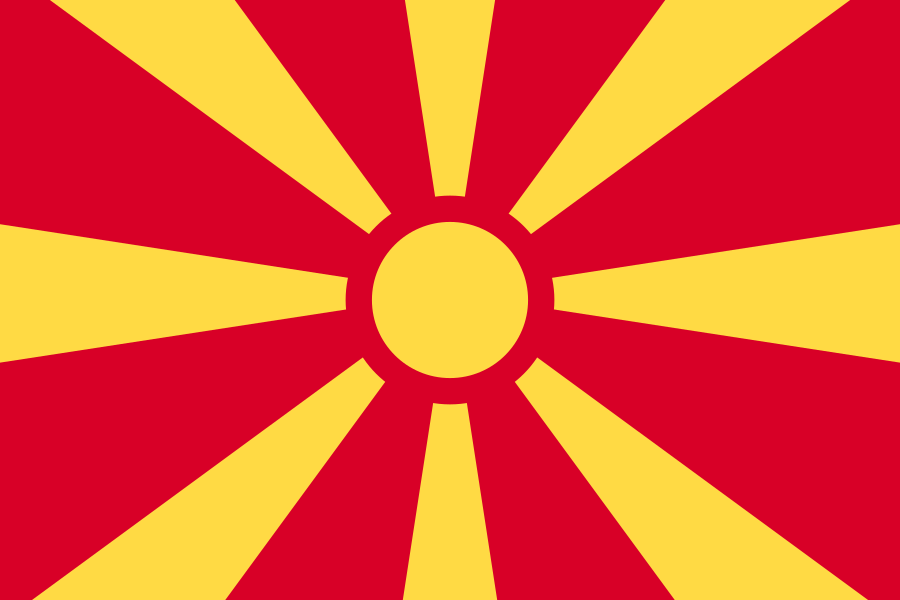
 North Macedonia

See
Tetovo and the Painted Mosque
The Šarena Mosque, the Painted Mosque, was first built in 1438 and rebuilt in 1833. It's an easy half-day trip.
Getting there: 43 km west, about 1 hour by bus or car

An Ottoman bazaar, a city rebuilt after 1963 and a square full of statues, with a canyon half an hour away. Three days, planned properly.
Photo: Antonija Stojcevska, CC BY-SA 3.0
Skopje looks like two cities because it is. On 26 July 1963 an earthquake hit at 5:17 in the morning and destroyed about 80 percent of the city. What came afterwards was concrete, a UN-backed plan by the Japanese architect Kenzo Tange and a lot of foreign aid, which is why Skopje calls itself the City of International Solidarity. Then, from 2010, the government added a second layer on top: Skopje 2014, a program of neoclassical façades, bridges and more than 40 monuments. Across the river, the Ottoman bazaar and its stone bridge survived all of it.
It's a compact, slightly strange capital, and you can see its argument with itself in one afternoon. The statue square, the bazaar of mosques and hamams, a fortress that's mostly walls and Mother Teresa's memorial house all sit within a 15-minute walk. Three days is the right length: one for the center, one for the old town and a hill, one for Matka Canyon. A fourth day means leaving town, which is also a fine idea (see the end of this page).
Day one is the square, the statues, a museum and the Stone Bridge. Day two is Mount Vodno in the morning, then the Old Bazaar and the Kale Fortress at sunset. Day three is Matka Canyon, with a boat to a cave and a walk. Start on a Friday: the Mother Teresa Memorial House and the Museum of the Macedonian Struggle are closed on Mondays, so Friday to Sunday avoids them and puts the canyon on a weekend, when bus 60 runs more often. For the wider picture, see North Macedonia; with more days, Ohrid is the obvious next stop.
Every stop from the plan below, colored by day. Pick a day to see its route.
Mother Teresa's memorial house, the statue-filled square and the story behind it, a museum of the national struggle, then the Stone Bridge and dinner in the bazaar.
A hike up Mount Vodno to the Millennium Cross, then the Ottoman bazaar and the Kale Fortress at sunset.
A day in the canyon west of the city: the monastery by the dam, a boat to Vrelo Cave, a walk or a paddle, and dinner back in Debar Maalo.
Everything today is within a 15-minute walk of Macedonia Square. The Memorial House and the Museum of the Macedonian Struggle both open at 10:00 and close at 18:00, with the last museum entry at 17:15, so do them in daylight and leave the bridges for the evening. Both are closed on Mondays, which is why this plan starts on a Friday.

Start with the Skopje person the rest of the world knows best. Mother Teresa was born here in 1910 and lived in the city until she was 18. Her family home is gone. The memorial house opened in January 2009 on Macedonia Street, on the site of the Sacred Heart church where she was baptized.
It's a small, quiet museum with a chapel, and both entry and the guided tour are free. Give it under an hour; it makes a calm start before the loud square a few minutes away.

You're now in the middle of the project that defines the modern look of the capital. After 1963 the square was a wide, empty modernist space. The government of the day, led by the nationalist VMRO-DPMNE party, argued the center needed a more classical, more earthquake-resistant face and a stronger sense of national pride. Skopje 2014 was announced in 2010 and by 2014 had produced about 136 structures: museums, ministries and a theater in neoclassical style, new bridges and more than 40 monuments. Estimates of the cost range from 80 to over 500 million EUR.
The centerpiece is the 14.5 m bronze Warrior on a Horse on a 10 m column, completed in 2011 for 20 years of independence. A plaque later confirmed it as Alexander the Great, and the fountain around it plays music. Nearby sit Tsar Samuel on a throne and, by the river, Justinian I, born near Skopje. The project is genuinely divided. Supporters credit it with drawing tourists; critics point to the price, to what they call antiquization, the claim of ancient Macedon as national ancestry during the name dispute with Greece, and to materials that have started to crack. In 2018 the government halted the program and announced plans to relabel some statues with inscriptions on Greek-Macedonian friendship.
For the layer underneath, the Old Railway Station, a short walk south, still has its clock stopped at 5:17.
A short walk south of the square stands the triumphal arch the city uses as its postcard. Porta Macedonia is 21 m tall and covered in marble reliefs of scenes from the country's history. It was completed in January 2012 and cost about 4.4 million EUR.
The reliefs are the official Macedonian version of the story, a warm-up for the museum.

After lunch near the square, walk to the Vardar embankment for the most theatrical Skopje 2014 building. The museum opened on 10 September 2011, with 16 departments and more than 100 wax figures. Its full name also covers the Museum of VMRO and the Museum of the Victims of the Communist Regime. The story is told from the Macedonian national point of view: Ottoman rule, the Ilinden uprising of 1903, the Balkan Wars, two world wars and the road to independence.
Know what you're getting: a national narrative in wax figures, not a neutral survey. It does explain how the country sees itself, and many of the statues you passed this morning. The museum offers a free audio guide in English on the izi.travel app.

Just upstream from the museum is the symbol of the city. The Stone Bridge has 12 arches, is 214 m long and stands on Roman foundations. The version you walk on was built between 1451 and 1469 under Sultan Mehmed II. It was repaired after the 1555 earthquake, and the rebel leader Karposh is believed to have been executed on it in 1689. In November 1944 the retreating Germans placed explosives on it before city notables talked them out of blowing it up.
It also marks a line. West of the bridge is the new Centar with its statues; east is the Old Bazaar, in a municipality with an Albanian majority, and the square with Skanderbeg's monument. Stop in the middle for the view of the fortress, then cross.
Walk north along the embankment for the Skopje 2014 bridges. The Eye Bridge has 28 statues of figures from the civilizations that lived in Macedonia, and the Art Bridge next to it has 29 statues of Macedonian musicians and artists. On the Centar bank stands the rebuilt Macedonian National Theatre, a copy of the 1927 building lost in 1963. The Macedonian Philharmonic, in bold modern lines, is the one new building here that doesn't imitate anything.
Evening is the time to see the project as its makers meant it, lit up, with locals out walking.
End the day across the bridge, in the Old Bazaar. Destan is a kebab house often described as the oldest restaurant still operating in Skopje, said to date from 1913, and famous for kebapi, the small grilled minced-meat sausages of the Balkans.
It's the simplest introduction to the national taste. Add shopska salad and a Skopsko beer.
Today is the long one, and it has a catch. The Vodno cable car has been out of service since April 2026, so the cross is a walk, not a ride. Start the hike by 9:30 so you're back in the city by 13:00, and be on the fortress wall before the sun goes down, around 16:15 in mid-November.

Vodno is the long ridge behind the city, around 1,065 m at its highest. On top is the Millennium Cross, 66 m tall, built in 2002 for two thousand years of Christianity. From its base you see all of Skopje laid out along the valley.
The cable car from Middle Vodno (Sredno Vodno) normally takes four minutes, but it has been shut since April 2026 after inspections found worn parts, faulty sensors and a risk of a gondola coming loose. The city has aimed to finish the overhaul in late November and the operator spoke of New Year, with no date announced, so check, and plan to walk. Take a taxi (about 15 minutes) or bus 25 from the Transport Center (about 40 minutes, infrequent, and the weekend timetable differs: check skopjebus.mk) to Middle Vodno, then follow trail 2: 2.1 km, about an hour, 490 m of climbing. Come down the same way. If the lift is running, a return ticket was 100 MKD (1.60 EUR) on the 2022 price list.
Back in town, the bazaar is the place for a sweet late lunch. Rigara is a long-running confectioner known for classic Turkish sweets such as baklava. This is where the Ottoman layer of the food becomes obvious: order one thing, add a Turkish coffee and sit.

The Old Bazaar (Čaršija, the Turkish word for a market quarter) has been a center of trade since at least the 12th century and is one of the largest in the Balkans. Roughly thirty mosques survive in it, along with caravanserais and baths.
Climb to the Mustafa Pasha Mosque, built in 1492 on a plateau above the lanes. Then walk down to Kurshumli An (Kursumli Han, the Lead Inn), a caravanserai from 1550 with a stone courtyard, and the Church of the Holy Saviour for its carved iconostasis and the tomb of the revolutionary Goce Delčev. Mosques, churches and signs in both Macedonian and Albanian stand side by side. Don't aim at one thing; the lanes themselves are the sight.

Five minutes from the mosque is a Turkish bath from the second half of the 15th century, now part of the National Gallery. Daut Pasha Hamam hosts changing art exhibitions, and the gallery lists hours of 10:00 to 18:00.
You come for the building rather than the art. Its sister bath, Čifte Hamam, is a short walk away and belongs to the same gallery.

The fortress above the bazaar is the oldest part of the city and its best viewpoint. The first fortress dates to the 6th century, probably under Emperor Justinian I, who was born near Skopje, and was built with stone from the Roman town of Skupi, destroyed by an earthquake in 518. In 1346 Stefan Dušan took the title of emperor at his coronation here. The 1963 quake damaged it again, and excavations began in 2006.
It's a free walk along the walls and towers, and the inside is an excavation site rather than a museum. Go for the view: the Stone Bridge, the minarets of the bazaar, the Centar and the Vodno ridge.
Kaldrma is a rakija bar on the steep street at the start of the bazaar, with more than 30 kinds on the list, a good first lesson in the national spirit. Rakija is distilled fruit brandy, served in a small glass and sipped, not shot. Ask for two or three kinds.
Take a short taxi ride to Debar Maalo, the bohemian quarter west of the center, settled in the 1920s by people from the Debar region. Skopski Merak, open since 1991, is a neighborhood favorite with tables on a leafy street, a long list of Macedonian wines, live music and a signature clay-pot dish.
Order the slow-cooked pork ribs or the clay-pot house specialty, plus a salad. It's a more polished table than yesterday's kebab, and a good place to try local wine.
Matka is about 17 km from the center, and getting there is the hard part. City bus 60 leaves the Transport Center for the dam (35-50 MKD, 24 departures on weekends in an October 2026 timetable), but some runs stop short of the dam. A taxi takes 25-30 minutes each way; agree the price and a pickup time. Vrelo Cave boats run in daylight, mostly when full, and thinly outside the warm season, so be at the dock by late morning.

Matka is a gorge cut by the Treska River, inside the city limits but nothing like a city. The river was dammed in 1938, making the country's first artificial lake, and the water sits green between rock walls. The canyon has ten caves and several medieval monasteries.
Start at the dam end, where St. Andrew's Monastery sits at the foot of the cliffs. It was founded around 1388 by Andrew, brother of Prince Marko, and is known for its well-preserved frescoes. A cafe, a restaurant and kayak rental are next to it, and the boat dock is nearby.

Vrelo Cave is reached by water. A boat takes you up the lake for about 20 minutes, with the cliffs rising on both sides, and you walk into the cave opening. Vrelo is among the deepest caves in Europe, with a discovered depth of 230 m, but you see only the dry entrance, not the flooded depths.
The whole trip takes around an hour. Outside the warm season boats can be sparse, so ask whether cave entry is included and confirm the return.
The hotel and restaurant Canyon Matka by the water, and a few others near the dam, serve traditional food. Order a shopska salad, grilled meat or tavče gravče and sit on the terrace if the day is mild.

In November, plan on the walk: the water is cold and winter kayak rental isn't confirmed. Climb to St. Nicholas Monastery (Šiševo), high on a cliff above the canyon, and look down on the lake and the dam. The path is steep, so wear real shoes; the flat path along the lake from the dam is the easy option.
In the warm season, kayaks rent next to St. Andrew's for around 5-5.50 EUR an hour for a single.
Finish in Debar Maalo at Idadija, one of the oldest kafanas (traditional taverns) in Skopje by local accounts, a no-frills grill house on a corner with a wide sidewalk. Expect grilled meat, salads and bean dishes such as tavče gravče, at low prices. After a day outdoors it's the right dinner: simple and hot.
Three days cover Skopje and one trip out. These are the best additions, from a mosque an hour away to Lake Ohrid and Greece.
The Šarena Mosque, the Painted Mosque, was first built in 1438 and rebuilt in 1833. It's an easy half-day trip.
Getting there: 43 km west, about 1 hour by bus or car

A Bronze Age archaeological site on a summit at about 1,000 m, near Kumanovo, long studied as an ancient observatory.
Getting there: About 70 km northeast, 1-1.5 hours by car; a tour or taxi is the practical option

An ancient town where the Crna River meets the Vardar, later the capital of the Roman province of Macedonia Salutaris.
Getting there: About 84 km south, 1.5 hours by car, near Gradsko on the main road to Greece

The lakeside town with its churches, frescoes and one of the oldest lakes in Europe. It deserves more than a day: the plan is in 5 Days in Ohrid.
Getting there: 171 km southwest, about 3 hours by bus or car

Greece's second city and a natural continuation south, with a day-by-day plan in 5 Days in Thessaloniki.
Getting there: 232 km south, about 4.5 hours by bus
Macedonian food is built on grilled meat, peppers, beans and white cheese, with an Ottoman sweet tooth. These are the dishes and drinks to look for.

Baked white beans in a clay pot with paprika and onion, the national dish. It's cheap, filling and a safe order when you can't read the menu.
Where to try it: Traditional restaurants and kafanas, such as Idadija in Debar Maalo or Skopski Merak.

Roasted red pepper spread that households make every autumn, eaten on bread or beside grilled meat. November is the right month for it.
Where to try it: Beside the grilled meat in most restaurants. Bit Pazar, the market at the far end of the bazaar, is the place to look for jars.

A boat-shaped bread topped with cubed pork or lamb, sometimes called Macedonian pizza.
Where to try it: Traditional restaurants; ask for it by name, as it isn't on every menu.

A casserole of meat and vegetables baked in a clay pot. It's heavy, so share one.
Where to try it: Traditional restaurants such as Skopski Merak, where clay-pot dishes are the house style.

Tomato, cucumber, pepper and onion under grated white cheese. It's the standard first order and goes with grilled meat.
Where to try it: Any restaurant, including Destan and the lakeside places at Matka.

Ridged fried dough soaked in sugar syrup, an Ottoman dessert found in bakeries and sweet shops. Expect to need a glass of water.
Where to try it: Any bakery or sweet shop in the Old Bazaar lanes; Rigara there is known for baklava.

Flaky pastry filled with cheese or minced meat, the standard breakfast and street snack.
Where to try it: Any bakery in the morning.

Fruit brandy, the national spirit, drunk in small glasses and sipped.
Where to try it: Kaldrma, a rakija bar at the start of the Old Bazaar, or with dinner at a kafana.

The Tikveš region in the south makes most of the country's wine, with Vranec as the main red and Temjanika as the main white. Skopsko is the best-known beer and Zlaten Dab the other big name; both are on tap nearly everywhere.
Where to try it: Skopski Merak has a long Macedonian wine list. Any pub for the beer.

Strong coffee brewed in a small copper pot; in the bazaar some cafes brew it on hot sand. It's slow by design.
Where to try it: Cafes in the Old Bazaar; sit down and give it 30 minutes.
Skopje is small, so almost any central base works. Choose by mood.
Best for: First-timers who want to walk everywhere
The square, the museums, the bridges and most restaurants are within 10 minutes. The catch: it's the busiest area at night and likely the priciest.
Best for: Atmosphere, mosques and cafes
Stay among the stone lanes below the fortress, with the mosques on your doorstep. The catch: fewer hotels than in Centar, and hilly cobbles with luggage.
Best for: Restaurants and a local, residential feel
A bohemian neighborhood west of the center with many traditional restaurants and bars. The catch: it's a short taxi ride to the square, so it suits people happy to take taxis.
In Map Drop the countries of Europe fall one at a time and you drop each into its place - North Macedonia is one of the pieces.
The practical stuff that makes the first day in Skopje easier.
North Macedonia uses the denar (MKD), at about 61.5 per euro. Many places quote prices in euros and cards are widely accepted, but bring denars in cash for the bazaar, taxis and small cafes. Use exchange offices, never street changers. ATMs often add a local fee of about 200-300 MKD.
The center is walkable. City buses are red: 50 MKD in cash from the driver (you get a QR ticket to scan on board), or 35 MKD through the SkopjeBus app. Taxis for short rides should not top 300 MKD; the Wizi app is the easy tourist option.
The airport bus costs 199 MKD (3 EUR) and takes about 25 minutes. A taxi is roughly 15-25 EUR; agree the price before you get in.
Visitors must register their address with the police within 48 hours; fines can reach 1,000 EUR. Hotels do it for you. In a private apartment, ask your host and get proof on paper.
Smoking is banned indoors in restaurants and cafes, but enforcement is uneven, and terraces are often smoky. Sit outside in the open if it bothers you.
Tipping isn't expected but is welcomed. Rounding up or leaving about 10 percent in a restaurant is plenty.
Macedonian is written in Cyrillic, and Albanian is co-official, so many signs in the Old Bazaar use both. Under-35s in the city and tourist businesses usually speak good English.
Mobile coverage is good and local SIM cards are cheap; you may need to show your passport to buy one. Plugs are the European two-pin types (C and F) at 230 V.
Yes. Three days covers the center, the Old Bazaar, the fortress, the main museums, Mount Vodno and Matka Canyon at an unhurried pace. Two days is possible if you skip the hike or the canyon. A fourth day is best spent on a trip to Ohrid, Tetovo or Stobi.
Yes, if you like cities with a clear story: an Ottoman bazaar, post-earthquake modernism and a controversial neoclassical makeover in one small area, plus a canyon close by.
A government program from 2010 to 2014 that gave the center neoclassical buildings, bridges and more than 40 monuments, including the big statue of Alexander the Great. Supporters say it drew tourists; critics object to the cost, the nationalist message and the quality. It was halted in 2018.
Yes. North Macedonia is generally safe and people are hospitable. Use normal city sense: keep valuables out of sight in crowded places and agree a taxi fare or use an app.
No, by European standards. A city bus ticket is 50 MKD, a museum about 5 EUR, a main course at a traditional restaurant 5-16 EUR. Short taxi rides are cheap; the ride to Matka costs more.
Not at the moment. It has been shut since April 2026 for repairs; the city has aimed for late November, the operator said around New Year, and no date is announced. You can walk up from Middle Vodno in about an hour. Check with the city bus company JSP Skopje before you go.
Not if you're from the EU, the US, the UK, Canada or Australia: you can stay up to 90 days. EU citizens can enter with a national ID card. Others should check the foreign ministry's list.
Yes, with limits. The canyon is free and open in daylight all year, but boats to Vrelo Cave run thinly outside the warm season and kayak rental may be closed. Go on a weekend, when bus 60 runs more often, ask at the dock before you pay and keep the walk to St. Nicholas Monastery as a fallback.
Find Skopje on the map, learn the flag and check how much you really know about North Macedonia.

Fewer churches than the legend says, and better ones than you expect. Five days in Ohrid, built around real opening hours.

A capital with no single postcard sight and a lot of good habits: coffee, markets, parks and one very odd museum.

A baroque old town, a tiny republic with a constitution and a hard recent past. Five days in Lithuania's capital, planned properly.