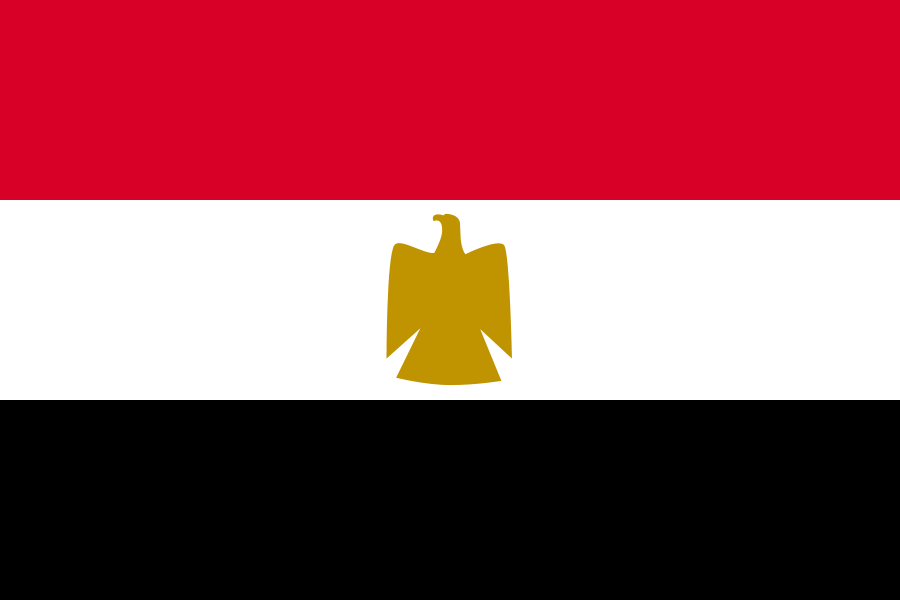
 Egypt

See
Al-Azhar Park
A landscaped park built on a former rubbish dump, with a view over the Citadel and Islamic Cairo. A calm place to end a long day on day four, especially at sunset.
Getting there: 3 km east of Downtown, 15 minutes by ride app

The pyramids, Tutankhamun's gold at the new museum, a thousand years of mosques and a city that never goes quiet. Five days, planned.
Photo: MusikAnimal, CC BY-SA 4.0
Cairo is the loudest, densest and most overwhelming city you'll visit this year, and it has the oldest of the Seven Wonders next door. The Great Pyramid was built around 2600 BC and is the only Wonder of the Ancient World still standing. A few miles away the Fatimids founded a capital in 969, the Citadel went up in 1176, and a Coptic church hangs over the gate of a Roman fortress. Almost everything here is layered on top of something older.
The city doesn't charm you, it grabs you. Traffic ignores lanes, someone always wants to sell you something, and the best moments come anyway: the first sight of the pyramids, a bowl of koshari at midnight, tea at a café that has outlived empires. Five days is the right length because the sights are spread over a huge area and each one takes a half day or more. In November 2025 the Grand Egyptian Museum opened in full and took Tutankhamun's whole collection with it, which turned the museum into a day of its own.
The plan keeps each day in one part of the metropolis. Day one is the Giza plateau and the Sphinx, day two the Grand Egyptian Museum, day three the pyramids of Saqqara and Dahshur, day four Islamic Cairo, and day five Coptic Cairo and the old Egyptian Museum in Tahrir. Alexandria is the day trip to add if you have a sixth day. Cairo is the doorway to all of Egypt, and everything that follows, from Luxor to the Red Sea, is easier once you've got the capital out of the way. Start on a Sunday: Egypt's weekend is Friday and Saturday, so the pyramids and the museum fall on quieter weekdays, Islamic Cairo lands midweek, and the weekend is free for Alexandria or a lie-in.
Every stop from the plan below, colored by day. Pick a day to see its route.
The Great Pyramid and its interior, Khafre and Menkaure, the Sphinx, then koshari in Downtown after dark.
A whole day in the world's largest museum for one civilization: the Grand Hall, Tutankhamun's gold, Khufu's boats, then the Nile after dark.
The first pyramid, an open-air museum of the old capital, and the Bent and Red Pyramids in the desert with almost no one around.
From Saladin's Citadel down the medieval spine of the city to Al-Azhar, then tea and shisha in the oldest bazaar.
Cairo's first mosque and the churches of the Coptic quarter in the morning, then what remains in the old museum on Tahrir Square.
Be at the gate when the plateau opens (8 am on the ministry's page, though some guides still say 7), and go straight for the Great Pyramid. The tickets for going inside are limited, the light is soft and the touts are still waking up. Everything on the plateau is paid by card at the official counters, and there is no boat to see at the foot of the Great Pyramid any more: it moved to the Grand Egyptian Museum, which is day two.

The Great Pyramid was built for the pharaoh Khufu around 2600 BC, over about 26 years. It stood 146.6 m (481 ft) tall and was the tallest man-made structure on Earth for more than 3,700 years. Today it's 138.5 m, because most of the smooth white limestone casing was removed over time. What you see today is the bare core, which is why the sides look like giant steps.
Enter at the new Visitor Center and the Great Gate, buy your ticket at the self-service machines and walk or take the shuttle that links the main stops. Walk all the way around the base before anything else. From the corner you can see how it sits against the desert sky, and the blocks up close are bigger than you expect. Skip the "free" offers and the men who walk beside you explaining things, you'll meet them in the camel stop below.
You go in through a low passage, then climb a steep ascending corridor that is barely over a meter high in places, through the soaring Grand Gallery and on to the King's Chamber. It's hot, stuffy and a little claustrophobic, and the chamber itself is bare, so weigh the price and the squeeze.
If you're fine with tight spaces, it's worth doing once, because the Grand Gallery is a real piece of engineering. If not, Khafre's pyramid is the better deal: the interior costs about 4.5 EUR (280 EGP), the corridor is a little wider and it ends in a chamber with the original granite sarcophagus lid.

The pyramid of Khafre, Khufu's son and successor, is 136 m high and looks taller than the Great Pyramid because it stands on higher ground. Next to it Menkaure's is the smallest of the three at about 62 m, and the small pyramids and tombs around the Great Pyramid belonged to queens and nobles.
East of the Great Pyramid is the tomb of Queen Meresankh III, a granddaughter of Khufu and a queen of Khafre. It's cut into the rock and still painted with scenes of daily life, and almost nobody goes in. Ask at the ticket office whether it's open, because status changes (about 3 EUR, 200 EGP). The Menkaure interior is a separate ticket too (280 EGP on the ministry list), and it's also worth asking whether it's open.
Riding a camel or horse at Giza is the classic image, and the scams around it are classic too. The offer is cheap, then once you're on top the price becomes 50 dollars a head, or the handler won't bring you down until you pay more. The same thing happens with "free" hats, headscarves and photos that end in a demand for cash.
If you want to ride, agree the full price, the route, the duration and the currency before you mount, take a screenshot of the deal and pay at the end. A short circuit costs roughly 200-400 EGP. The desert viewpoint behind the pyramids is a loop of about 30 minutes. A polite, firm la shukran (no thank you) and steady walking handle most of the rest.

Finish the plateau on the east side, where the walk from the pyramids ends at the Great Sphinx. It's carved from the limestone bedrock of the plateau itself and faces east, towards the sunrise. It's the oldest known monumental sculpture in Egypt. Scholars still argue about whose face it carries: Khufu or one of his sons, Djedefre or Khafre.
Because it faces east, an afternoon visit finds the face in shade, but the crowds are thinner. The enclosure is entered separately, near the Valley Temple, and the plateau ticket covers it.
Back in Downtown, dinner is koshari at Abou Tarek on Champollion Street, a koshari house that grew from a street cart. The national dish is a layered mountain of rice, lentils, pasta and chickpeas under spicy tomato sauce and crispy onions, with a splash of garlic vinegar and hot sauce on the side. It's cheap, quick and exactly what you want after a day in the sun.
Order a medium bowl, stir everything together and eat it with the little spoon. It's a lunch dish for most Egyptians, so the place is busy at noon and easier in the evening.
The Grand Egyptian Museum (GEM) is 2 km from the pyramids and has to be booked in advance on the official site, with a timed slot. On Wednesdays and Saturdays it stays open late (reports say until 9 or 10 pm); on the other days the galleries close at 6 pm, with the last entry an hour earlier. Plan on at least four hours, and note that in November the sun sets around 5 pm, so the Nile comes after dark.

The Grand Egyptian Museum was announced in 1992, took more than twenty years to build and opened in full on 1 November 2025. It's the largest museum in the world dedicated to a single civilization. You enter under a glass roof and a transparent facade, with the pyramids visible through it, and an 11 m, 83-tonne statue of Ramesses II standing in the middle.
The Grand Staircase behind it climbs six stories and is lined with more than 60 objects, leading to the 12 main exhibition halls. The ticket includes the Tutankhamun Galleries, the Main Galleries, the Grand Hall, the Grand Staircase and Khufu's Boats Museum, and nothing more.

For the first time the complete collection of Tutankhamun is in one place: 5,398 pieces from his tomb in the Valley of the Kings, displayed in a 7,500 m2 section of the museum. The funeral mask is the one everyone comes for, but the whole thing is the point: the gilded shrines, the chariots, the beds, the sandals, the small things a boy-king took to the afterlife.
Go first thing, when the halls are calm. Photography is allowed in most of the museum but not in designated areas of these galleries, and there's no flash, tripod or selfie stick anywhere. The rest of the Tahrir collection stays where it was, which is day five.
The museum complex has a commercial area, and a break halfway through is not optional. Four hours of galleries on an empty stomach is how people end up skipping the Main Galleries. Outside food and drink aren't allowed in, so eat what the museum sells and have a cup of tea before you go back up.
Hours and menus change, so look at the signs inside rather than trusting a guide, and don't expect much beyond sandwiches and coffee.
Climb the stairs to the Main Galleries, which tell Egyptian history from the Predynastic Period to late antiquity. The museum holds an estimated 100,000 artifacts, at least 20,000 of them on show for the first time. It's hard to know where to stop, so pick two or three halls and stay with them.
The burials of Yuya and Thuya, the parents of Queen Tiye, are not here: they stayed in Tahrir, which is day five.

This is the Solar Boat that used to sit in its own museum by the Great Pyramid. In 1954 an Egyptian archaeologist clearing the south side of the pyramid found a sealed pit, and in it a boat of Lebanese cedar in about 1,200 pieces, buried for Khufu's journey in the afterlife about 4,600 years ago. In August 2021 the whole boat was moved to the GEM on a remote-controlled vehicle.
A second boat from a neighboring pit is being conserved and reassembled in front of visitors, so what you see may change from visit to visit. It's included in your ticket.

Finish with something slow, once you're out of the museum and across the city, which can take a long time in the evening traffic. Feluccas, the traditional sailboats, wait along the Nile corniche in Garden City, across from the Four Seasons hotel. Agree the price before you board and pay after the ride, or you may get much less than you paid for. The loud public boats with music are fun for half an hour but not restful.
On the water the city's noise drops away, the lights come on along the bridges and the day settles. Dress warmly, because it gets cool on the river after dark from November on.
Today you go south, to Saqqara and Dahshur about 40 km from Cairo, and see how the pyramids were invented. A car with a driver for the day is the practical way to link the sites. The ministry lists Saqqara as open 8 am to 4 pm and Dahshur 8 am to 5 pm, so start early.

The Step Pyramid of Djoser is the first pyramid ever built, and the earliest colossal stone building in Egypt. It went up in the 27th century BC for the pharaoh Djoser, in six tiers, originally 62.5 m high and covered in polished white limestone. Tradition credits it to Imhotep, the architect who is often called the first named architect in history.
Walk across the huge courtyard of the funerary complex and look at the pyramid in terms of what came next: here the builders were still stacking tiers on a mastaba, and the true smooth pyramid first appears at Dahshur, which is where you go this afternoon. Going inside the Step Pyramid costs extra (about 4.5 EUR, 280 EGP) and may be closed, so ask at the gate.
The Imhotep Museum stands at the foot of the Saqqara necropolis and is a good place to understand the site before you walk it. Allow half an hour, no more, and ask at the gate whether it's covered by your ticket.
Saqqara is more than the Step Pyramid. The necropolis holds the pyramids and tombs of later Old Kingdom officials, many with carved and painted walls. Ask at the gate which are open on the day, because that changes. If you have time, the Serapeum, the underground burial place of the sacred Apis bulls of Memphis, is also here, with a separate ticket (about 5.5 EUR, 340 EGP).

On the way to Dahshur you pass Mit Rahina, the village by the ruins of Memphis, the ancient capital. The site is now an open-air museum, small but quick, built around a giant colossus of Ramesses II, and the village has simple places for lunch: the standard order is grilled chicken or kofta with rice, salad and bread, or ful and ta'ameya if you want something lighter.
Tell your driver in advance that you want a simple local lunch, not the tourist buffet.

The Red Pyramid at Dahshur was built for Sneferu, the father of Khufu, and it is believed to be Egypt's first successful attempt at a true, smooth-sided pyramid. It is the third largest in Egypt. It was not originally red: it was clad in white Tura limestone, and when the medieval builders of Cairo took the cladding, the reddish core showed. Locals call it the Bat Pyramid.
You go down a long shaft into the chambers. The inside is included in the ticket, and the man at the tunnel entrance who asks for baksheesh for sitting there is not owed anything. It's a stooping, hot descent, and you may be almost alone inside, which is the real luxury after Giza.

Sneferu's other pyramid is an experiment that went wrong, in plain view. The Bent Pyramid starts at a steep 54 degrees and changes at 47 m to a shallower 43 degrees, which gives it the bent look. It's one of Egypt's early attempts at a pyramid, and the builders clearly changed course halfway.
Stay for the late afternoon light, with the desert quiet around it. The interior is sometimes closed to protect it, so don't count on getting inside.
Islamic Cairo is a living district, not a museum, and you walk. Start at the Citadel when it opens, because it closes around 5 pm and in November the sun sets at about the same time. Cover your shoulders and knees, take shoes you can slip off, and leave the Friday midday prayer alone: mosques are closed to visitors at prayer times.

The Citadel was begun by Saladin in 1176 on a spur of the Mokattam hills, and for nearly 700 years it was the seat of Egypt's rulers. From the terrace you look out over the whole city and its minarets.
The Muhammad Ali Mosque, sometimes called the Alabaster Mosque, was built between 1832 and 1857 by the ruler who is often called the founder of modern Egypt. It was built in an Ottoman and European-influenced style rather than the traditional Cairene one, and its walls are covered in alabaster. Take off your shoes at the entrance. Then see the older Al-Nasir Muhammad Mosque and, if you have energy, one of the Citadel's museums.

Walk down the hill from the Citadel to the square, where two mosques face each other. The Mosque-Madrasa of Sultan Hasan was built between 1356 and 1363 and is considered one of the most impressive monuments in the city, and the scale alone is overwhelming.
Next to it Al-Rifa'i is much newer, from 1911, and holds the tombs of royal family members, including the last Shah of Iran. If you only enter one, choose Sultan Hassan.
Bab Zuweila, the southern gate of the old city, marks the start of Al-Muizz Street, and the streets around it are full of lunch. Look for the plain places with a queue of Egyptians: a ful and ta'ameya counter, a koshari bowl or a shawarma stand where the meat turns on a vertical spit and gets shaved into flatbread with tahini and pickles.
Eat quickly and walk it off. The best street food here costs a couple of euros and the hygiene advice is simple: go for the busiest place and avoid anywhere empty.

This is the spine of the Fatimid city, a street lined with mosques, madrasas and merchants' houses from the Fatimid, Mamluk and Ottoman periods. Walk north from Bab Zuweila. The Qalawun complex was built by a sultan between 1284 and 1285 and holds a hospital, a madrasa, a mausoleum and a mosque, and it's regarded as one of the major monuments of the Mamluk period.
A few minutes further is Bayt al-Suhaymi, an Ottoman merchant house of the 16th-17th century that is possibly the best-preserved in Cairo, little visited and quiet. By the time you reach the northern gate, Bab al-Futuh, you'll have walked about a thousand years.

Walk back south from Bab al-Futuh to Al-Azhar, the first mosque of the new Fatimid capital, founded in 970 and dedicated in 972. The university attached to it is the second oldest continuously run in the world, after Al-Qarawiyyin in Fez.
It's an active mosque, so dress modestly (long trousers or skirts, covered arms, a scarf for women, shoes off at the entrance) and come outside prayer times. It is also a quiet break after the street.

The Khan el-Khalili is the great bazaar of Cairo, a maze of lanes selling perfume, spices, gold, brass lamps and every souvenir you didn't know you wanted. It dates to the Mamluk era and is named for one of its old caravanserais. It's touristy and loud, and the hassle is real, so go in with a plan and say la shukran a lot.
Bargain, start at about a third of the first price and be ready to walk away. Shop for spices, tea and cotton rather than the plastic pyramids, and keep an eye on your pockets in the crowds. The lights come on at dusk and the whole thing finally makes sense.
El Fishawy is a café inside the bazaar that says it has served tea since 1773 (some historians give 1797) and is said to stay open around the clock, though it's wise to check late at night. The mirrors are old and the tables spill into the alley. Naguib Mahfouz, the Nobel-winning novelist, was a regular.
Order mint tea or Turkish coffee (say how sweet you want it) and, if you smoke, a water pipe in the "double apple" flavor. It's a tourist favorite, so prices are higher than in a normal ahwa, but a half hour here watching the lane is worth it.
The Mar Girgis stop on metro Line 1 puts you a few minutes from the Coptic quarter. The Egyptian Museum's ticket window closes at about 4 pm, so be on your way back by lunch and keep that lunch short: after the Coptic quarter you'll have about two hours at the museum, no more.

Start with the mosque that began it all. The Mosque of Amr ibn al-As was founded in 642, after the Arab conquest of Egypt, in the settlement of Fustat, and it was Cairo's first mosque. It has been rebuilt several times, so don't expect the 7th century, but the site is the point.
It's open to visitors outside prayer times, so dress modestly and leave your shoes outside. The Christian quarter is a short walk away, a reminder that Cairo's religions grew on the same few streets.

The Hanging Church, officially the Church of the Virgin Mary, is one of the oldest churches in Egypt, and it is suspended over a passage between the bastions of the Roman fortress of Babylon, which is where the nickname comes from. Inside, the wooden roof is supposedly shaped like Noah's ark, and the icons are worth a slow look.
It's a working church of the Coptic Orthodox Church, so be quiet and dress modestly. Entry is free.

The Coptic Museum was founded in 1908 by Marcus Simaika and houses the largest collection of Coptic Christian art in the world. The facade is modeled on the 12th-century Al-Aqmar Mosque, and the collection traces Egypt's history through Coptic art.
Plan an hour and a half and expect it to be quieter than the other museums on this trip, which is a gift after the GEM.

Walk the lane to the Church of Saint Sergius and Saint Bacchus, named for two early Roman martyrs and among the oldest in Cairo, with a nave decorated by 12 columns. It's open roughly 9 am to 4 pm.
Close by the Ben Ezra Synagogue, also called the Geniza Synagogue, is Egypt's oldest surviving synagogue, from the 9th century, inside the shell of a 4th-century church. Local folklore puts it where the baby Moses was found. There is no active congregation, and it's now a museum. Entry is free, donations welcome.
Take the metro or a ride back to Downtown for lunch, a district full of cheap, quick and good places. The best bets are a counter for ful medames with a ta'ameya sandwich, a koshari shop or a bakery for feteer, the layered flaky pie, savory or sweet, that Cairenes eat as a meal.
For a sweet ending, look for a pastry shop with a tray of basbousa in the window and umm ali in a clay dish. Both are covered in the food section below.

The pink Egyptian Museum is a 1902 building, and for a century it was where you went to see Tutankhamun. That is over. The complete Tutankhamun collection moved to the GEM, and the royal mummies went to the National Museum of Egyptian Civilization in Fustat. Tahrir isn't closed, though. It's being repositioned as the museum of the longer story and keeps a huge reserve collection.
What you still come for, according to the ministry: the complete burials of Yuya and Thuya, the treasures of Psusennes I and Tanis, the Narmer Palette that shows the unification of Egypt, and the statues of Khufu, Khafre and Menkaure. Displays get rearranged, so ask on the day what's on show. Allow two hours, three if you're a fan. It is a dusty, crowded, wonderful old building.
End the trip the way most Cairenes end the day, in a coffee house (ahwa) with plastic chairs on the street. Order tea or Turkish coffee, a water pipe if you want one, and watch the street. There are thousands of them across the city.
Downtown around Tahrir Square is a good place to start. Foreigners are made welcome, and in Downtown and the tourist areas women alone or in groups should expect nothing more than the ordinary hassle.
Alexandria is the day trip to pick if you have a sixth day. The rest are shorter additions or swaps.
A landscaped park built on a former rubbish dump, with a view over the Citadel and Islamic Cairo. A calm place to end a long day on day four, especially at sunset.
Getting there: 3 km east of Downtown, 15 minutes by ride app

The Mosque of Ibn Tulun, built between 876 and 879, is the oldest well-preserved mosque in Egypt, with a vast open courtyard in the style of Samarra in Iraq. The Gayer-Anderson House next to it is a museum of a traditional mansion. A good addition to day four.
Getting there: 4 km south of Downtown, 15-20 minutes by ride app, near the Citadel

An Islamic necropolis where people live among the tombs. Go with a local guide who knows the area, not alone. It's a living neighborhood rather than a sight.
Getting there: 5 km east of Downtown, 20 minutes by ride app

The National Museum of Egyptian Civilization in Fustat holds the royal mummies of the 2021 Pharaohs' Golden Parade in an underground hall. Around 8-9 EUR (500-550 EGP, check the current price). If the mummies matter to you, add it to day five in place of the Egyptian Museum.
Getting there: 6 km south of Downtown, near Coptic Cairo, 25 minutes by ride app

Wadi El Hitan, the Valley of the Whales, is a UNESCO World Heritage site with hundreds of fossils of early whales in the desert. Full-day tours from Cairo run roughly 90-150 EUR per person and often add Wadi El Rayan. It's a great trip for geology fans, but it's the second choice: the road is long and you need a driver or a tour.
Getting there: About 150 km southwest, 1.5-2 hours each way by car or tour

The pick for a sixth day. Cairo to Alexandria is an easy morning train (book on the ENR app or enr.gov.eg), and Alexandria is a different Egypt: Mediterranean, Greek and Roman, with sea air. See the Bibliotheca Alexandrina, the modern library on the site of the ancient one, the Citadel of Qaitbay built in 1477-79 on the harbor point, the Catacombs of Kom el Shoqafa and the Graeco-Roman Museum, and eat fish by the Corniche. Fayoum is the other option, but it needs a driver and a long desert day, and Alexandria needs only a train ticket. If you only have five days, drop day five and do Alexandria instead.
Getting there: 208 km north, about 2.5 hours by Talgo train from Ramses Station to Sidi Gaber, 6.5-8 EUR (400-510 EGP) in first class
Egyptian food is cheap, filling and mostly vegetarian by accident. These are the dishes and drinks to look for, from koshari on the street to bread pudding at the end of the night.

Egypt's national dish: rice, lentils, pasta and chickpeas under spicy tomato sauce and crispy fried onions, finished with garlic vinegar and hot sauce. It's cheap, vegan and filling.
Where to try it: A koshari shop, sold in small, medium and large bowls. Abou Tarek on Champollion Street in Downtown is the best-known.

Slow-cooked fava beans mashed with olive oil, lemon and cumin. It's the Egyptian breakfast, eaten with bread, onion and a boiled egg.
Where to try it: A street counter or a small ful shop in the morning. Look for a queue of locals.

Egyptian falafel, made with fava beans instead of chickpeas, which gives it a bright green center. It's fried fresh and stuffed into bread with salad and tahini.
Where to try it: A takeaway counter, hot from the fryer. Never from a tray that has sat for hours.

A viscous green soup of jute leaves cooked with garlic and coriander, served over rice with chicken or rabbit. Many visitors find the texture odd and then get hooked.
Where to try it: A sit-down Egyptian restaurant, usually at lunch. Order it with rice and a side of bread.

Egypt's most beloved dessert, a warm pudding of puff pastry, milk, nuts and raisins baked until the top blisters. Eat it hot.
Where to try it: A pastry shop or restaurant in a clay dish, in the evening.

Semolina cake soaked in syrup and topped with an almond. It's in every bakery and at every celebration, sweet enough to need tea.
Where to try it: A bakery or sweet shop, sold by the square.

A layered, flaky pie, rolled thin and baked. It can be sweet with honey or jam, or savory with cheese, meat and vegetables, like a pizza. Cairenes eat it as a meal.
Where to try it: A feteer shop, often open late at night.
Marinated meat roasted on a vertical spit and shaved into flatbread with tahini, pickles and garlic sauce. It came from the Levant and Cairo has made it its own.
Where to try it: A busy stand where the spit turns constantly and the meat is carved fresh.
Vine leaves, peppers and zucchini stuffed with herbed rice, sometimes with minced meat. It's a family dish and a staple of home cooking, hard to find done well in tourist spots.
Where to try it: A traditional Egyptian restaurant, as a mezze or main dish.
Tea (shai) and Turkish coffee are served in every coffee house, and hibiscus tea (karkade) is served warm or cold depending on the season. Say how sweet you want your coffee, from sweet to medium to little sugar.
Where to try it: An ahwa on any street, or El Fishawy in Khan el-Khalili, said to be open day and night.
Juice stalls press whatever is in season: orange, mango, strawberry, guava, pomegranate and sugarcane. Delicious, but be careful, as some vendors mix in tap water.
Where to try it: A juice stall that presses to order in front of you. Ask for no ice.
Egypt has no national spirit worth the trip, but alcohol is legal and sold at licensed places such as hotels, some restaurants and bars, mostly in Zamalek and Downtown. During Ramadan the rules are stricter and the supply thinner.
Where to try it: Hotel bars and licensed restaurants. Don't expect to find it at street places or mosque-side cafés.
Cairo is huge and the traffic is bad, so choose the base around the days that matter most.
Best for: First-timers who want the metro, the Egyptian Museum and cheap food on the doorstep
Koshari shops and coffee houses on every corner, and the Egyptian Museum a few minutes away. It's also the district for cheaper bars and nightlife. The catch is the noise, and the long ride to Giza on days one to three.
Best for: A calmer, greener island with cafés and licensed restaurants
An island in the Nile and the home of Cairo's upscale restaurants and nightspots. Farther from the pyramids and Islamic Cairo than Downtown is, so allow plenty of traffic time to most sights.
Best for: Days one to three: the pyramids, the GEM and Saqqara
A hotel with a pyramid view is easy to find here. The catch is that you're away from everything else in the evening, and the street around the plateau is the touts' territory.
Best for: Quiet, with the river and the main sights close by
A district on the Nile corniche just south of Downtown, where the feluccas leave from (opposite the Four Seasons). Calmer than Downtown, though with fewer cafés and cheap places to eat.
Pinpoint: click each country on the world map - inside the border for full points, the closer the more you earn.
The practical stuff that makes the first day in Cairo easier.
Most visitors need a visa. A single-entry tourist visa on arrival costs 30 USD since March 2026, and the e-visa on the official portal (visa2egypt.gov.eg) is 30 USD for single entry and 65 for multiple. A rise to 33 USD from 1 January 2027 has been reported, based on a cabinet decision, but the e-visa price for 2027 isn't confirmed, so check the official portal before you go. Nationalities differ: check the Egyptian visa portal for yours.
The currency is the Egyptian pound (EGP). ATMs are everywhere, and avoid Euronet machines. At Giza, the Citadel and the Egyptian Museum, the ticket counters take cards, so bring a Visa or Mastercard, but also carry small notes for tips, toilets and taxis. Cairo is cash country for everything small.
Use Uber, Careem or inDrive instead of street taxis. Locals find them cheaper and safer, especially for women. A local SIM or eSIM helps, because Careem needs an Egyptian phone number. Rides across town cost a few euros, but a driver for the whole day to Saqqara and Dahshur is the practical way to do day three, so agree the price first. Watch out for drivers who ask for cash up front.
If someone approaches you on the street, assume they want something. The classics: the place you're going to is closed, a taxi driver suggests his cousin's shop, a friendly man offers to show you the way to a mosque and then asks for money. At Giza, agree every price in advance (camels, horses, photos). The only legitimate tickets are at the official counters.
Cover shoulders and knees. Women are often asked to cover their hair at active mosques, and scarves are lent at the door. Take off your shoes at the entrance, so wear socks. Mosques close to visitors at prayer times. Outside the mosques you don't need to cover your hair, but arms and legs covered is the polite standard for women traveling alone.
Baksheesh is a way of life. A guard who opens a tomb or shows you a detail expects 20-50 EGP. A driver gets about 10% of the fare, a guide for a whole day roughly 10-20 USD. In restaurants add around 10% when service was good, even if a service charge is on the bill. Small notes in your pocket make everything smoother.
Ramadan is expected to start around 8 February 2027 and end with Eid al-Fitr around 9 March 2027, depending on the moon. The big sites stay open but may close one or two hours earlier, so don't arrive after 3 pm. Small local eateries can close during the day, while hotels and big restaurants stay open, and alcohol is harder to find. Shops and restaurants closed at 2 am during Ramadan 2026. Don't eat or drink in the street during the day.
Cairo is safe for visitors in practice, with petty crime and traffic as the main risks. The UK's FCDO advice, updated 27 October 2026, advises against all travel to North Sinai and parts of the Western Desert and the borders, and does not list Cairo, Giza, Luxor, Aswan or the Red Sea coast among them. It also notes that tension in the Middle East can escalate quickly. The US State Department rated Egypt Level 2, exercise increased caution, in March 2026 reports. Check your own government's current advice before you go.
The Great Pyramid and the Sphinx at Giza, Tutankhamun at the Grand Egyptian Museum, the Step Pyramid at Saqqara, the Red and Bent Pyramids at Dahshur, the Citadel and the Muhammad Ali Mosque, Al-Muizz Street, Khan el-Khalili, and Coptic Cairo. This plan covers all of them.
Alexandria, because it's a straight train ride of about 2.5 hours and a completely different side of Egypt, with the Bibliotheca Alexandrina and the Citadel of Qaitbay. Fayoum and Wadi El Hitan (the whale fossils) is the alternative, but it needs a driver and a long desert day. Saqqara and Dahshur, which is day three here, is the best trip for the pyramids themselves.
Generally yes. The risks are scams, harassment of women alone and the traffic, more than violence. Official advice warns against travel to some border and desert areas but does not list Cairo or Giza (see the safety tip above). Use ride apps, agree prices in advance and check your own government's advice.
Daily costs are low but the tickets add up. The Grand Egyptian Museum is about 30 EUR (1,830 EGP), the Giza plateau about 11 EUR (700 EGP) plus 24 EUR (1,500 EGP) to go inside the Great Pyramid. Food and rides are cheap. The five days in this plan cost roughly 120 EUR in entry tickets.
Most nationalities do. A single-entry tourist visa costs 30 USD on arrival or by e-visa at visa2egypt.gov.eg, and a rise to 33 USD in 2027 has been reported. Check the portal for your passport before you book, because the fees have changed several times in 2026.
At the big sites, yes, and at Giza the counters take cards only. For everything small, such as tips, street food, taxis and toilets, carry cash. ATMs are everywhere.
Ramadan is expected from about 8 February to 9 March 2027, depending on the moon. Sites and museums close earlier, many small restaurants are shut by day, alcohol is harder to find and evenings are lively after iftar. You can still see everything, just start early and finish by 3 pm.
Find Cairo on the map, learn the flag and check how much you really know about Egypt.

Warm water, long boat days and a very long hotel strip. Five days on the Red Sea, with a straight verdict on every excursion.
Bases: Sakkala, El Gouna, Makadi Bay, Sahl Hasheesh

Karnak, the Valley of the Kings and the sunrise balloon, with the ticket traps explained. Three days in the world's biggest open-air museum.

Philae by boat, a felucca on the Nile, a Nubian village and Abu Simbel, with the dam told honestly. Three days at Egypt's southern gate.

Same warm sea, almost the same weather. The difference is where the reef is, how you fly there and what else you want to see.

Islands, ruins and tavernas, or a Red Sea that stays warm all winter. And then: which island against which resort.

A Greek island of lagoons, ruins and tavernas, or a Red Sea that is warm all year. It mostly comes down to the month you travel.